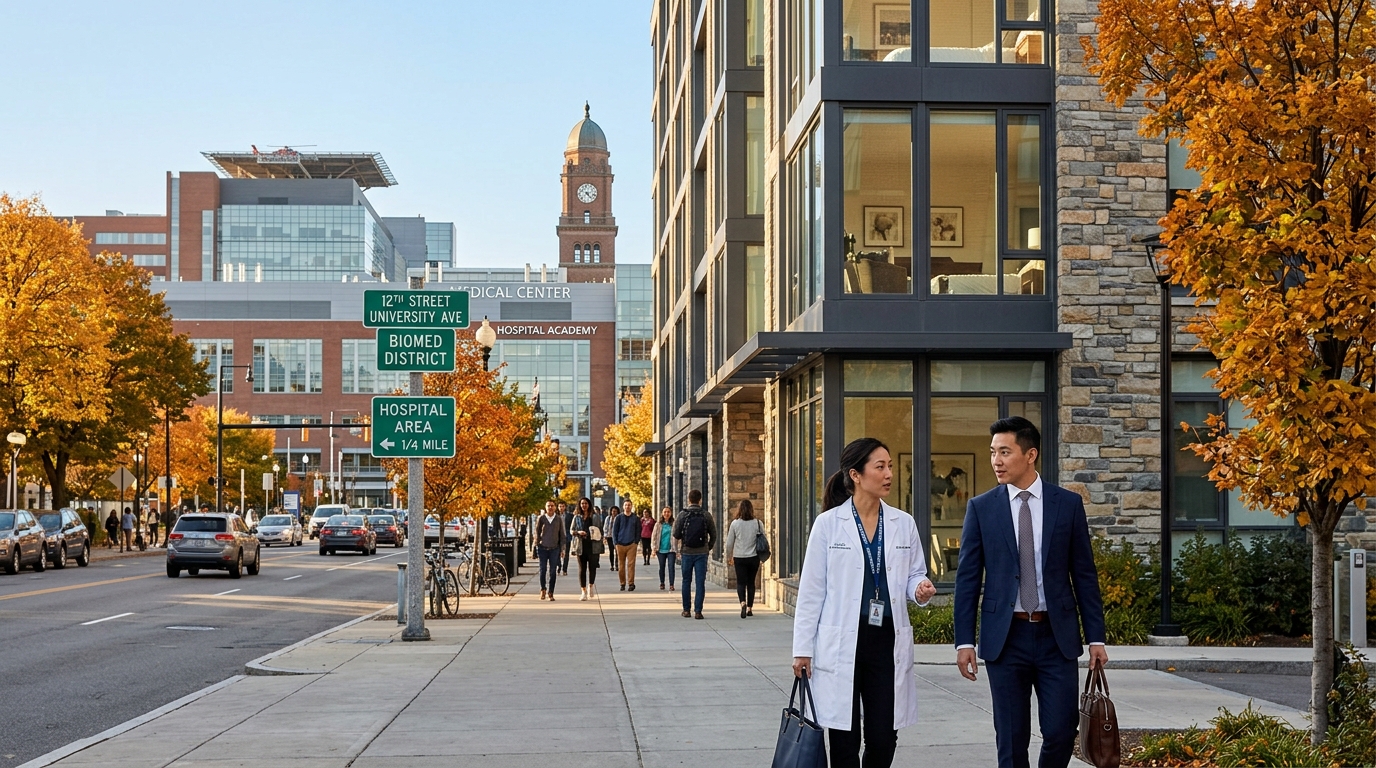
In the sophisticated landscape of real estate investment, the quest for predictable appreciation often leads capital toward emerging markets or speculative developments. However, seasoned institutional players frequently prioritize a more stable and historically potent catalyst: the presence of anchor institutions. These entities, primarily consisting of major research universities, teaching hospitals, and specialized medical centers, create a localized economic ecosystem that functions independently of broader market volatility. This phenomenon, often referred to as the Eds and Meds model, provides a structural foundation for asset appreciation that few other catalysts can replicate.
The primary driver of value in these specific micro-markets is the permanence of the employer base. Unlike traditional corporate tenants, which may relocate in search of tax incentives or lower labor costs, a major university or a level-one trauma center is effectively permanent. These institutions are rooted by massive physical footprints, specialized laboratories, and regulatory certifications that are impossible to move. For the real estate investor, this permanence translates into a perpetual floor for housing demand. Even during periods of broader economic contraction, the workforce associated with these institutions remains largely intact, protecting the underlying asset from the drastic devaluations seen in more cyclical markets.
Beyond mere stability, anchor institutions attract a specific demographic profile that accelerates capital appreciation. These hubs are magnets for high-quality human capital, including medical professionals, researchers, and academic faculty. This workforce typically commands higher-than-average median incomes and exhibits a strong preference for proximity to their place of work. When high-income earners compete for a limited supply of housing within a defined radius of an institutional campus, the result is a consistent upward pressure on property values. This is not the result of temporary market hype, but rather a reflection of the localized concentration of purchasing power.
Furthermore, the appreciation potential is amplified by the innovation spillover effect. Major research institutions often serve as the nucleus for private sector growth. Biotechnology firms, venture capital offices, and specialized consulting groups frequently cluster around these anchors to gain access to talent and intellectual property. This creates a secondary layer of demand for both residential and high-end commercial real estate. As these innovation districts mature, they transform formerly quiet neighborhoods into high-density economic engines, significantly increasing the land value over time. The transition from a purely academic or medical zone to a vibrant, mixed-use district is a key indicator of long-term appreciation potential.
Investors must also consider the inelasticity of supply that characterizes these institutional corridors. Most major universities and hospitals are located in established urban or suburban cores where developable land is at a premium. Zoning restrictions and the physical constraints of the existing institutional campus often prevent new supply from meeting the growing demand. This structural scarcity ensures that existing assets maintain a competitive advantage. When demand is consistently driven by a stable, high-earning workforce and supply is physically constrained by the environment, the fundamental laws of economics dictate a steady appreciation of the asset base.
The resilience of these markets is perhaps their most compelling feature for the risk-averse investor. During national downturns, educational and healthcare spending often remains steady or even increases, providing a counter-cyclical buffer. While other regions may experience a flight of capital, institutional hubs tend to see capital preservation as investors seek safety in assets with proven occupancy and demand. This flight to quality further supports property valuations, ensuring that the appreciation gained during growth cycles is not eroded during leaner times.
To successfully execute this strategy, an investor must look beyond the macro-level data and analyze the specific growth plans of the nearby institutions. Capital improvements to a medical center or the expansion of a graduate research program serve as leading indicators for future residential demand. By positioning a portfolio within the immediate orbit of these anchors, an investor is not merely betting on market trends, but is instead aligning with the long-term growth of essential social infrastructure. This approach prioritizes assets that are integrated into the fundamental fabric of the local economy, offering a path to wealth accumulation that is both disciplined and data-driven.